

The history of Château de Servanes in Mouriès
Servanes, from the Provençal word Serba (Reservoir).
The Château was built in the middle of the 15th century.
Based on several sources, including Jean Paul Clébert's "Louise Colet ou la Muse".
From 1739 to the present day...
Chronology of a family home in Mouriès
1739
Jean Baptiste Benoit Le Blanc De Servanes (1739 - 1822) was Chevalier Seigneur de Servanes.
He had 4 children, including Henriette, born in 1770, who married Antoine Fleuri Révoil (1770 - 1826) in 1794.
The Château, neglected by Le Blanc for his revolutionary passion, fell into ruin.
In addition to the damage caused when he was arrested in his home, the roof needs to be redone and the buildings, barns, sheepfolds and oil mill are in a state of disrepair that is a disgrace. The olive groves have been abandoned since the great frost of 1789. More and more creditors were demanding payment and threatening to sell the property.
1800
Antoine, who had just been appointed director of the post office in Aix and enjoyed a good position bolstered by the Révoils' personal fortune, undertook to save Servanes from ruin.
He died there in 1808.
1810
The Révoils then moved to Aix for professional reasons.
They had 6 children, the last of whom, Louise, born in 1810, was as beautiful as her mother but also had a very different character from the rest of the family (rebellious, secretive, dreamy). She married Hippolyte Raymond Colet in 1834.
Louise Colet became a French poet and woman of letters. She was also known as the mistress of Gustave Flaubert and Alfred de Musset. (She died in 1876).
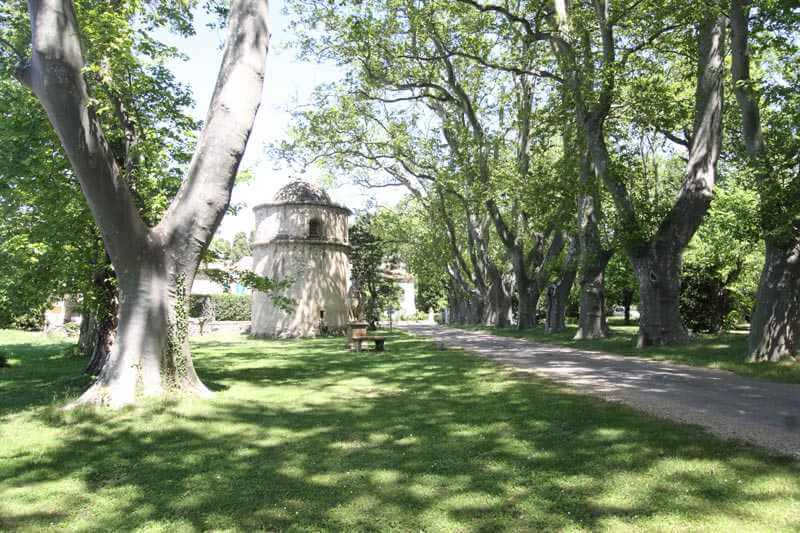
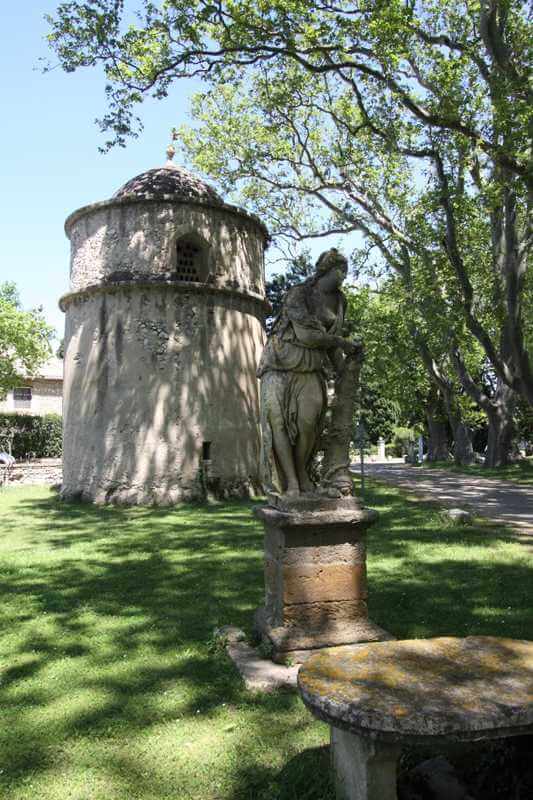
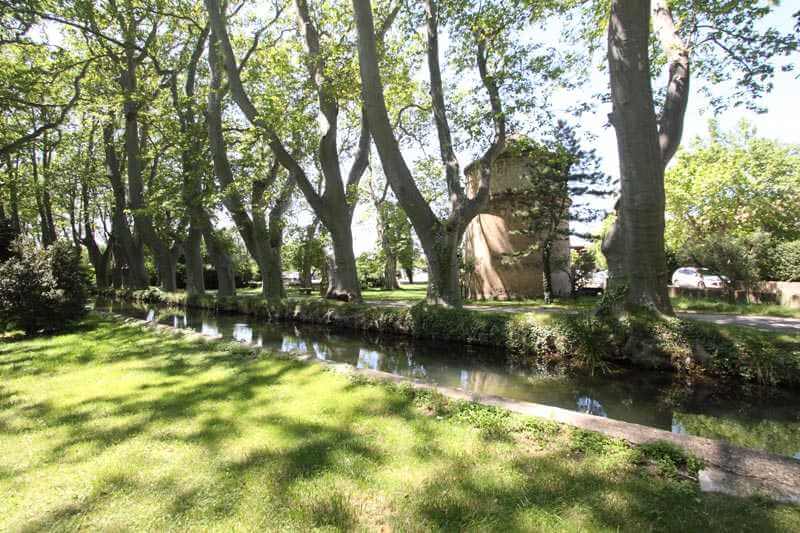
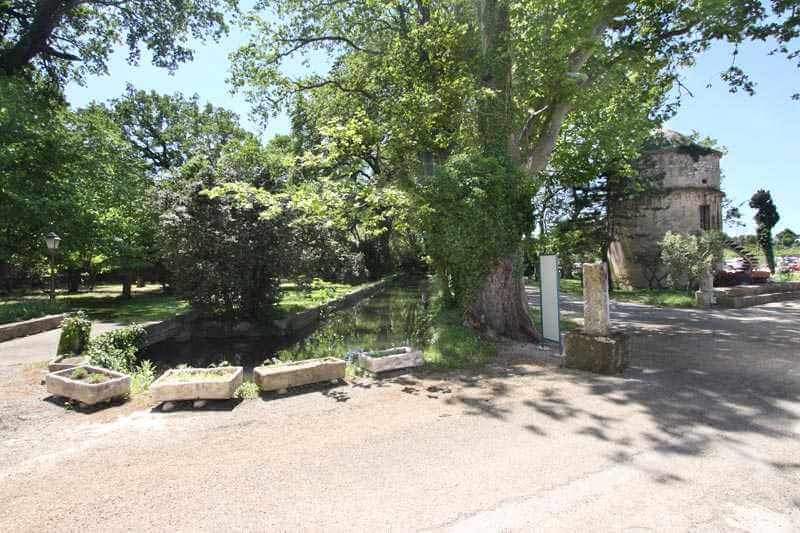
Antoine, Henriette and their children return to the Château every summer. Quite an expedition. Finally past Mouriès, the convoy plunges into a valley, greener and greener, wetter and wetter. You can smell the water somewhere. At the foot of the mountain, an alley under tall elm trees, through rosemary and bramble bushes. A large dovecote, massive and round like a fortified tower, with a checkerboard pattern of square holes at the top. Beyond it, the Château. A very fine classical-style building, all in length, one of those Arles farmhouses facing south, but a luxurious farmhouse with lots of doors and windows, and a habitable first floor. In front, large ponds with running water. Surrounding it, a large park with trees taller than the house and paths that lead into an undergrowth full of dead leaves.
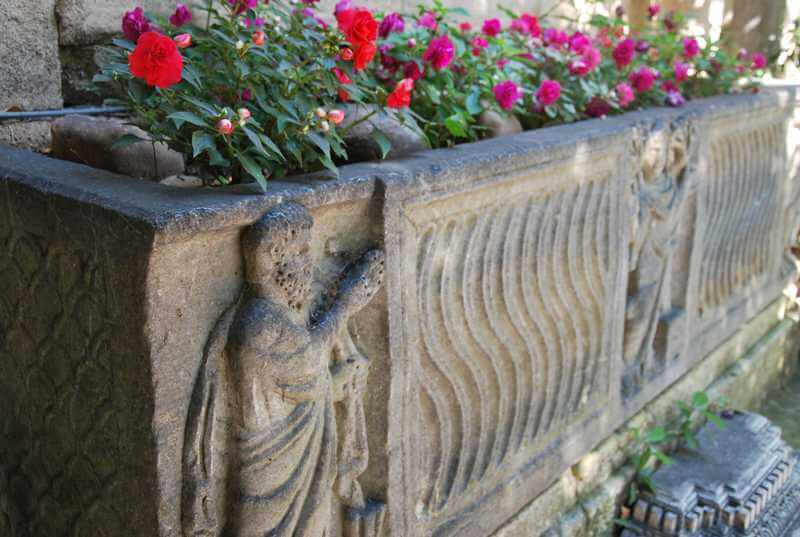
To the west of the Château are the farm buildings, the accommodation for the people of Servanes, the stables, sheepfolds and barns. Everywhere, chickens, ducks and peacocks wheel and shout: Léon! And doves on the roofs. To hide the estate's agricultural function, a few rosebushes have been planted, boxwoods pruned and water lilies placed in the ponds.
Inside, it's the emptiness of the large halls, the half-light of the closed rooms, the cool immensity of the tiled floors. Children get lost in this labyrinth!
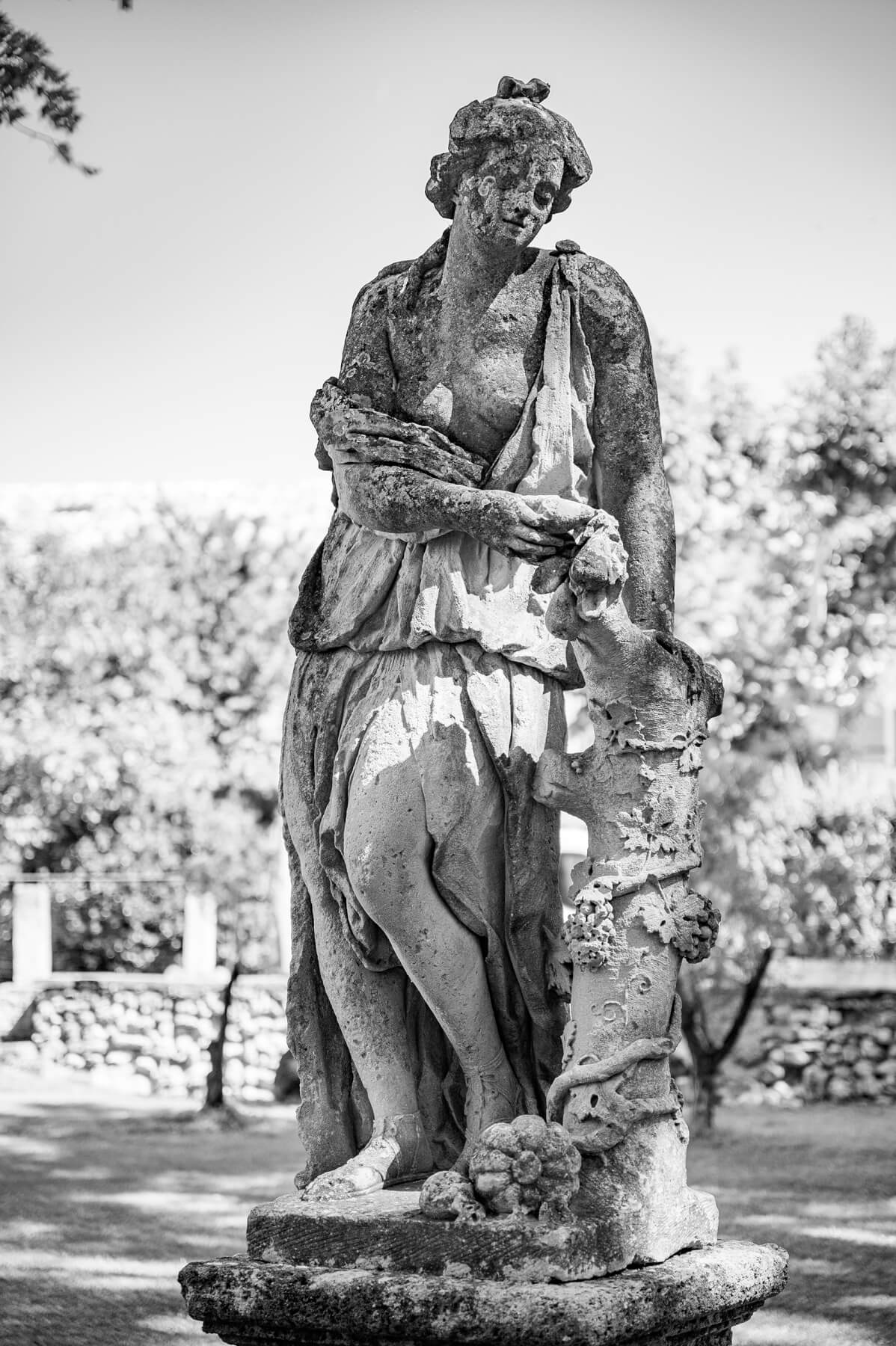
On the other side of the Château, the immediately steep mountain seems inaccessible. Above it, the Caisses: a rocky chaos of bare white stone, washed by the rain, eaten away by the wind and ossified by the sun. Here you can still find ancient coins and fragments of ancient statues, as well as pieces of red pottery, the crockery of the first occupants, who are said to have come from Greece to establish one of their temples here.
All they bring back from their holidays are sensations of heat, arid countryside, white skies, yellow light, dry dust, silent afternoons and naps that leave their heads heavy and their skin clammy.
1830
When Antoine died, his eldest daughter, Joséphine, married Pierre Révoil, Antoine's cousin and a history painter, and settled permanently in Servanes. Furniture was brought in, cupboards filled and walls decorated with paintings.
They discovered the winter life of the château and spent their time in the common room, lit by a large stone fireplace where a stump fire blazed between the mechanical spit and the vegetable garden where the soup was heated, under the four-cornered vaulted ceiling.
The Révoils are now gentlemen farmers (grape harvest, olive groves, ploughing, harvesting).
Servanes is also home to important people and lords.
1860
Henri, the second son of Pierre and Joséphine, born in 1822, was to become a renowned architect. Among other projects, he completed work on the Cathedral de la Major in Marseille and the decorations for Notre Dame de la Garde. He restored many buildings in the southern Mediterranean region, including the church of Saint Trophime in Arles, the Palais de Papes in Avignon and Montmajour Abbey. (Some of his furniture and books still hang in the hotel lounge).
He was the father of five children, including Georges, an explorer, photographer and diplomat who knew Arthur Rimbaud, and Paul (1856 - 1914), a diplomat (Switzerland and Spain) and governor in Algeria, where he played a major role at the Algeciras conference in 1906. He donated the Servanes water to the commune of Mouriès. In gratitude, the commune named the main street in the village in his honour.
Paul married Charlotte and they had three children:
Jacques married Simone Marie Doë de Mandreville, and they had a son, Jean.
Anaïs wife of Henri Louis Etienne Winter, they will have a daughter Françoise
Pierre married Anne Marie Charlotte de Carméjane Pierredon, and they had two sons, Paul and Frédéric.
1914
Jacques and Pierre inherited the estate when Paul died in 1914.
Jacques bought out Pierre's shares to become the sole owner.
1966
In 1966, Charlotte, the ambassador's wife, died at the age of 99. Her son Jacques died a few months later.
His heir, Jean, did not wish to manage the estate and asked his cousin Paul (Jacques' godson) to take over the Servanes business.
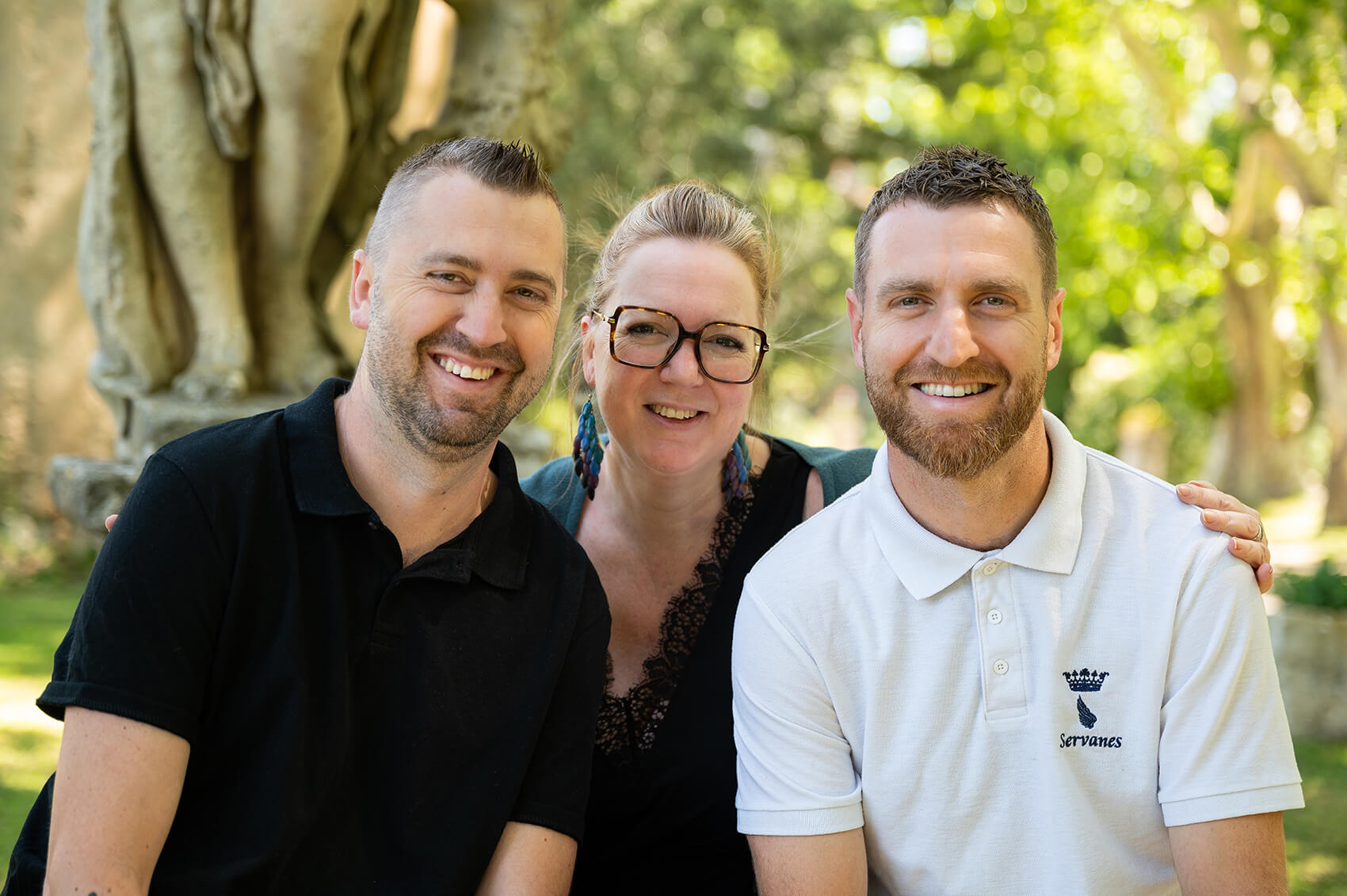
From then on, a new direction was taken at Château de Servanes. The eldest member of Paul's family, Jean François, took over the running of the estate and decided with his parents to create a hotel to enable the estate to be preserved.
1986
In 1986, as the estate had grown, it was decided to stop farming. Only 40 hectares of olive trees were left to continue the estate's olive oil production. The farm was replaced by the creation of a golf course on the estate.
So it's thanks to all our ancestors that we're delighted to be able to welcome you here today and share with you our attachment to Servanes.